De Kift
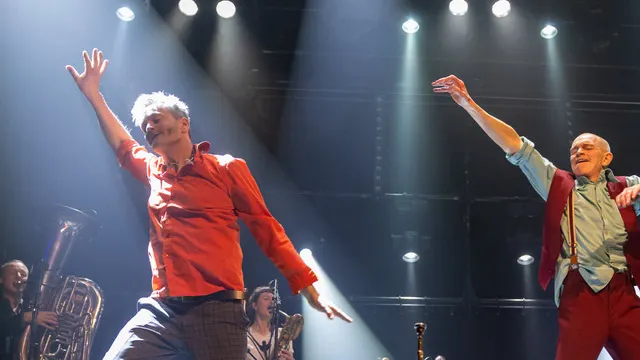
Formed in the Netherlands in 1988 around Ferry Heijne and Wim ter Weele, De Kift developed from a punk base toward a repertoire where indie rock, brass bands, folk and song intersect, with a strong emphasis on brass and Dutch-language lyrics. The group, whose lineup has evolved over the years in an almost familial spirit, was early distinguished by a literary-inspired writing, notably after the departure of singer Maarten Oudschoorn, when Ferry Heijne took over the singing and Jan Heijne joined the ensemble on trumpet. This orientation is reflected on IJverzucht (1989) and Krankenhaus (1993), before De Kift pursued a distinctive path with Gaaphonger (1996), Vlaskoorts (1999), Koper (2001), Vier Voor Vier (2003), 7 (2006), Hoofdkaas (2008), Brik (2011), Bidonville (2014), Bal (2017) and Hoogriet (2020). Close to the Dutch alternative scene and linked to The Ex through several projects, De Kift also worked with other groups under its Vinylsingleproject in 2008, notably Franz Ferdinand and Zita Swoon. Alongside records, De Kift developed stage forms and projects related to theatre and cinema, extending a direct, collective and artisanal aesthetic where punk energy coexists with brass arrangements, folk melodies and a pronounced taste for narrative.
Upcoming events 3
Past events 1
| Oct 11 |
|