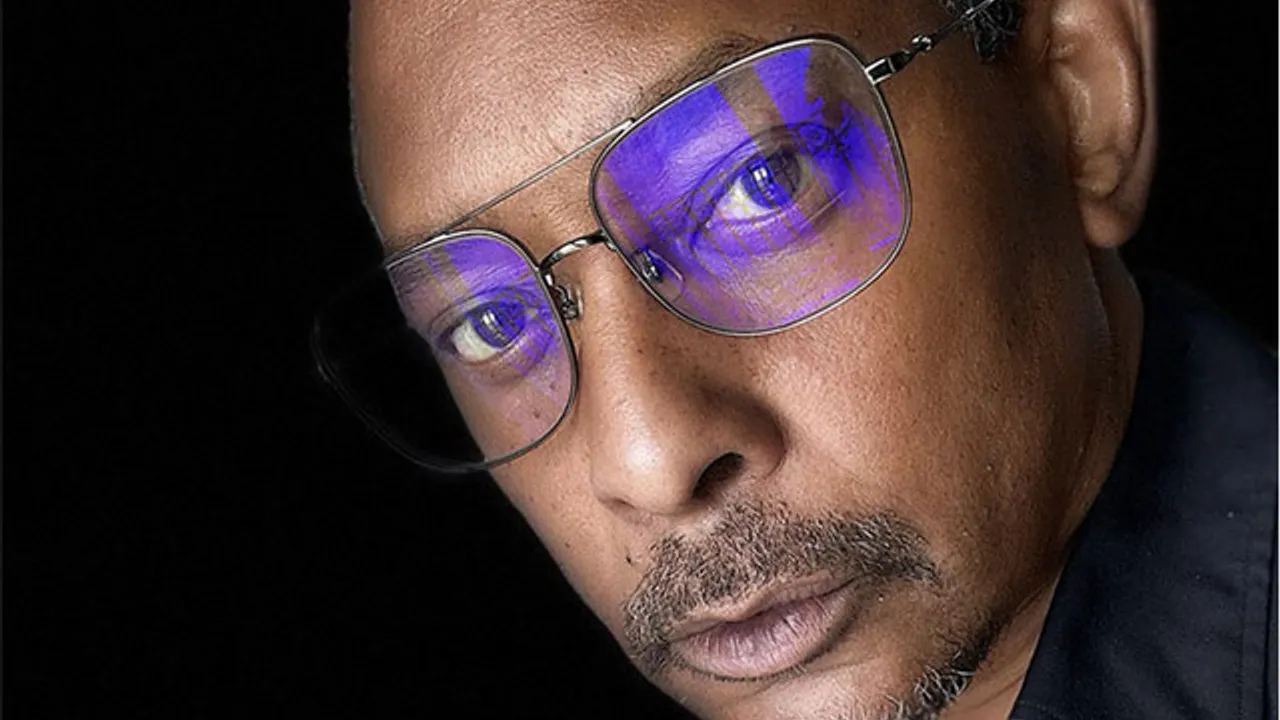
Derrick May
- Sexta-feira, outubro 9
- 23:59-06:00
- Moog Barcelona Carrer de l'Arc del Teatre, 3, 08002 Barcelona, Espanha
Info
Derrick May was born in Detroit in 1963, an only child largely raised by his mother. At age 13 he began attending school in the Belleville suburb; there he met Juan Atkins and the two began swapping mix tapes, with Atkins serving as May’s entry point to the worlds of Parliament, Kraftwerk and Gary Numan. When his mother moved to Chicago, May stayed in Detroit with another friend, Kevin Saunderson, to finish his schooling. By 1981, Atkins had also taught May and Saunderson the essence of DJing, and the trio formed Deep Space Soundworks, a collective created to present their favorite music at parties and clubs. May and Atkins also began working with a local DJ named Electrifyin’ Mojo, the man who first introduced Atkins to Kraftwerk and primitive synth-pop, crafting elaborate megamixes for Mojo’s radio program.
After graduating from high school, May attended university on a football scholarship. However, he soon grew tired of academic life and returned to Detroit, where he worked in an arcade. During his frequent trips to Chicago to visit his mother, he connected with the city’s house scene, which at the time was in its early stages. May was fascinated by the warmth and sense of community in venues such as the Power Plant and the Music Box, where DJs like Frankie Knuckles and Ron Hardy used turntable setups and open-reel tape decks to create mixes that recaptured the disco spirit while propelling the music toward the future. May also brought Saunderson to the clubs on several occasions and stayed in Chicago for up to a year. When he returned again to Detroit, the need to have his own club led May and the Deep Space family to found the Music Institute. It became the hub of Detroit’s growing underground musical family, a place where May, Atkins and Saunderson DJed alongside peers such as Eddie “Flashin” Fowlkes and Blake Baxter. The club revitalized a sense of community for many residents and changed the lives of second‑wave techno figures such as Carl Craig, Stacey Pullen, Kenny Larkin and Richie Hawtin.
Although May owned a Roland TR-909 synthesizer, he had hardly recorded material in the early ’80s. When Juan Atkins thrived in 1981 with the local success of his group Cybotron, this inspired May to begin recording seriously. He made his vinyl debut with “Let’s Go” (the third release on Metroplex Records, Atkins’ label) and then founded his own label, Transmat, a Metroplex subsidiary named after Atkins’ track “Night Drive (Time, Space, Transmat).” May introduced Rhythim Is Rhythim, his most important alias, with the Transmat single “Nude Photo.” The producer released further future classics of the genre: “Freestyle,” “Strings of Life,” “It Is What It Is” and “Kaos.”
Of those early singles, “Strings of Life” had an especially big impact in Britain during the country’s house explosion between 1987 and 1988, turning May into one of the first American techno artists to tour England. He was also highly sought after as a remixer, both for pop acts eager to gain credibility in clubs and for pure dance projects. However, a run of setbacks at the turn of the decade seemed to cool May’s fortunes. The British rave scene, which had grown strong between 1986 and 1990, was overwhelmed by increasingly frenetic music to compete with rising drug use. Soon, most of the British dance-music hits were homegrown hardcore or rave-pop acts (Altern-8, Sunscreem, The Prodigy), while much of the club world forgot its American inspirations in favor of novelty tracks aimed at the charts.
In 1991, May seemed ready to return; at one point, he considered forming a Kraftwerk-inspired techno supergroup named Intelex with Atkins and Saunderson. Although negotiations to sign with ZTT Records, Trevor Horn’s label, looked promising, the deal ultimately collapsed and May later rejected several invitations from multinational record companies. In fact, he largely stopped producing music by the end of 1991, though he worked with ambient pioneer Steve Hillage on tracks for the debut album of his project System 7. May continued to DJ around the world and maintained his status in the eyes of many top-tier producers. His Transmat label continued to host some of techno’s most notable singles, including releases by Silent Phase (Stacey Pullen), Model 500 (Juan Atkins), Joey Beltram, K-Alexi, Psyche (Carl Craig) and Dark Comedy (Kenny Larkin). In 1995, Sony Japan compiled his most innovative tracks in the one-disc retrospective Innovator, and May contributed a track to Sony’s Ghost in the Shell video game soundtrack.
Derrick May will perform at Moog Barcelona on 9 October 2026.
Line-up

Participants
Local
Moog Barcelona
Carrer de l'Arc del Teatre, 3, 08002 Barcelona, Espanha