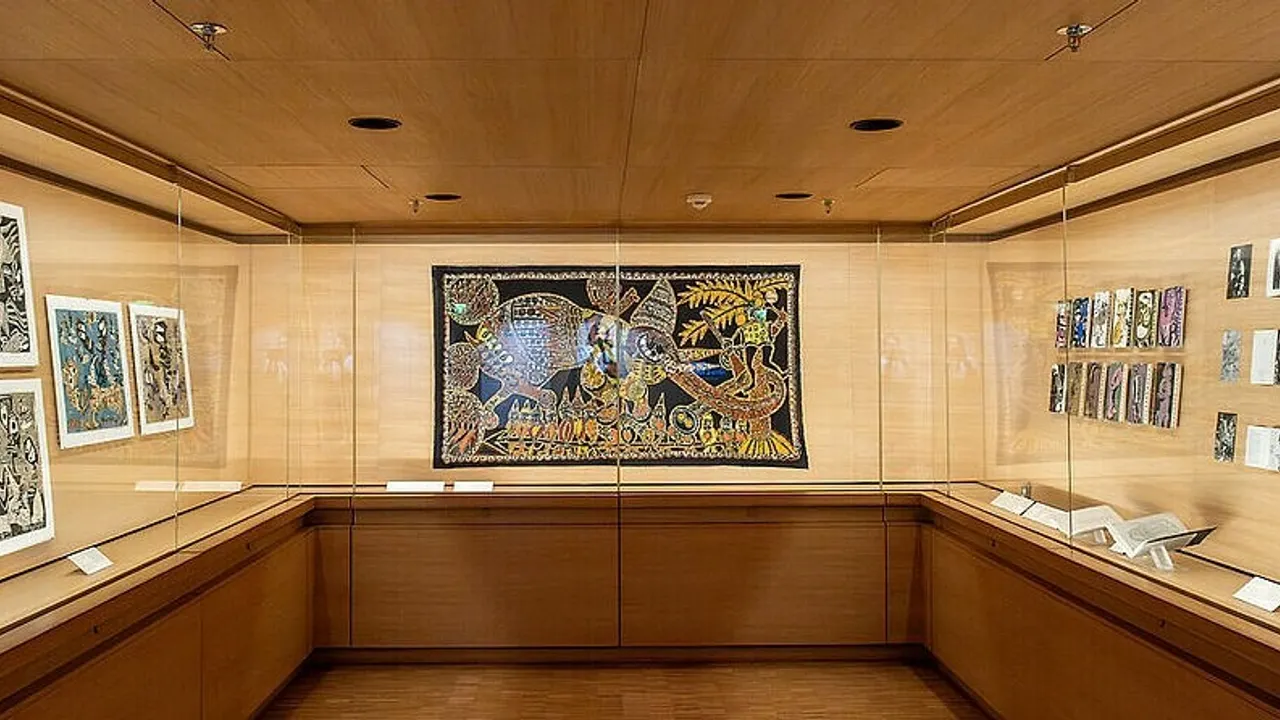
Le Mbari Club, un espace de création transnationale au Nigeria
- De quinta-feira, julho 2 a domingo, outubro 11
- 10:30-19:00
- Musée du Quai Branly Jacques Chirac 37 Quai Branly, 75007 Paris, França
Info
By gathering works, archives, books, and journals, this graphic arts box highlights the richness of intellectual and artistic exchanges that traverse the African continent and extend well beyond, making Mbari an emblematic site of Nigerian and Pan-African cultural modernity. On the eve of Nigeria's independence in 1960, creativity is a political and transnational tool for writers and artists. Created in 1957 by the German-born linguist Ulli Beier, the Black Orpheus journal quickly established itself as a vehicle for dissemination and recognition for a new generation of anglophone African writers, among them Chinua Achebe and Wole Soyinka. Ulli Beier and his wife Susanne Wenger cultivate with writers Ezekiel (Es'kia) Mphahlele and Chinua Achebe the idea of a place in Nigeria dedicated to creativity and cultural debates. In 1961, they established in Ibadan a club of writers and artists, named Mbari. In the Igbo language, 'Mbari' refers to the notion of creation. With an open courtyard, a bar and a restaurant, Mbari is a multidisciplinary space where concerts, dances, debates, exhibitions and theatrical performances take place. Mbari Club is distinguished by its international openness: it invites artists from Nigeria, but also from other African countries, Europe and the United States. In 1962, Nigerian playwright Duro Ladipo founded with Ulli Beier the Mbari Mbayo Club in the city of Osogbo, contributing to the emergence of a particularly dynamic local artistic scene. This effervescence was encouraged by Ulli Beier. His successive wives, Susanne Wenger and Georgina Beier, also play an essential role in the training and recognition of Osogbo's artists.
Local
Musée du Quai Branly Jacques Chirac
37 Quai Branly, 75007 Paris, França