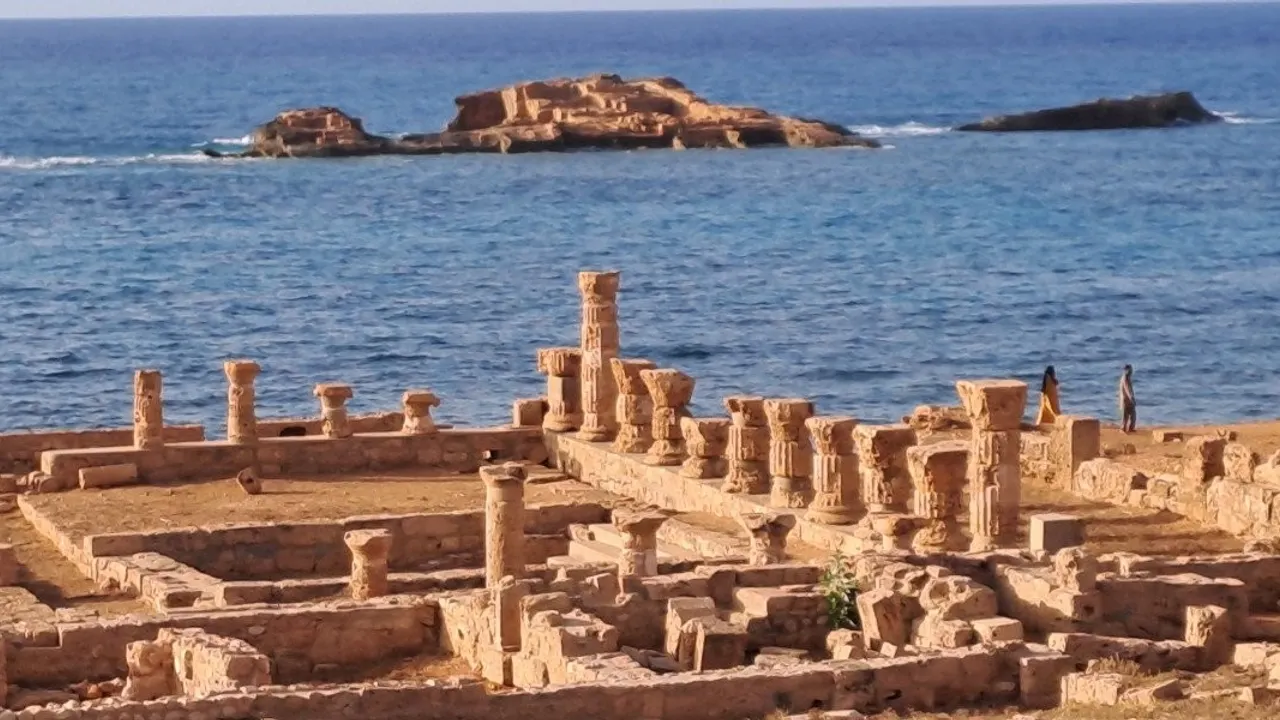
Derniers jours ! Libye, patrimoine révélé
- From mercoledì, maggio 13 to martedì, ottobre 20
- 10:00-18:00
- Institut du Monde Arabe 1 Rue des Fossés Saint-Bernard, 75005 Paris, Francia
Info
Through a selection of photographs and videos, this exhibition at the Arab World Institute highlights the long‑term scientific work carried out by the French archaeological mission in Libya (MAFL) in close collaboration with Libyan authorities, and reveals the diversity of the sites studied, the periods explored, and the challenges of preservation and restoration.
For nearly fifty years, the French archaeological mission in Libya has been exploring and valuing a heritage from prehistory to the medieval period across the entire Libyan territory. The exhibition illustrates and documents this work.
Among the sites presented:
Măsak, the first preventive archaeology campaign conducted in Libya, from 2001 to 2005, in the NC191 oil concession, deep in the Sahara.
Bu Njem and the Syrtian region, the subject of two missions, one focused on the study of Roman fortification lines and the ancient fort, at present Bu Njem, the other in five valleys of the Syrtian region.
Leptis Magna, a site founded by the Phoenicians in the 7th century BC, which reached its apex under the Roman Empire thanks to flourishing trade and the patronage of Septimius Severus, the emperor from the city.
Abou Tamsa, a rock shelter in Cyrenaica, occupied between the 7th and 5th millennia BC by small groups of pastoralist‑hunter‑gatherers.
Apollonia, a port founded in the 7th century BC, whose existence is attested for more than a millennium, from the archaic period to late antiquity.
Latrun, located on the seafront, east of Apollonia, offering a view of the evolution of ancient Cyrenaican villages, from the Hellenistic period to abandonment following the Arab conquest.
The western Marmarica region, an area where 56 archaeological sites have been identified, with traces of life from prehistory to the present day.
Surt, located in central coastal Libya, in the desert separating Tripolitania from Cyrenaica, the first Islamic site excavated in Libya, in 1963.
Underwater excavations of the Port of Apollonia, now half-submerged; its underwater architectural remains are among the most remarkable in the Mediterranean.
Underwater excavations of Leptis Magna and Sabratha.
The fight against illicit trafficking of archaeological goods that threatens Libya’s heritage and has accelerated since 2011, fueled by strong international demand.
Participants
Luogo
Institut du Monde Arabe
1 Rue des Fossés Saint-Bernard, 75005 Paris, Francia